Why Auditors Recommend Emissions Platforms such as Call from Earth for Scope 1, 2 & 3 Audits
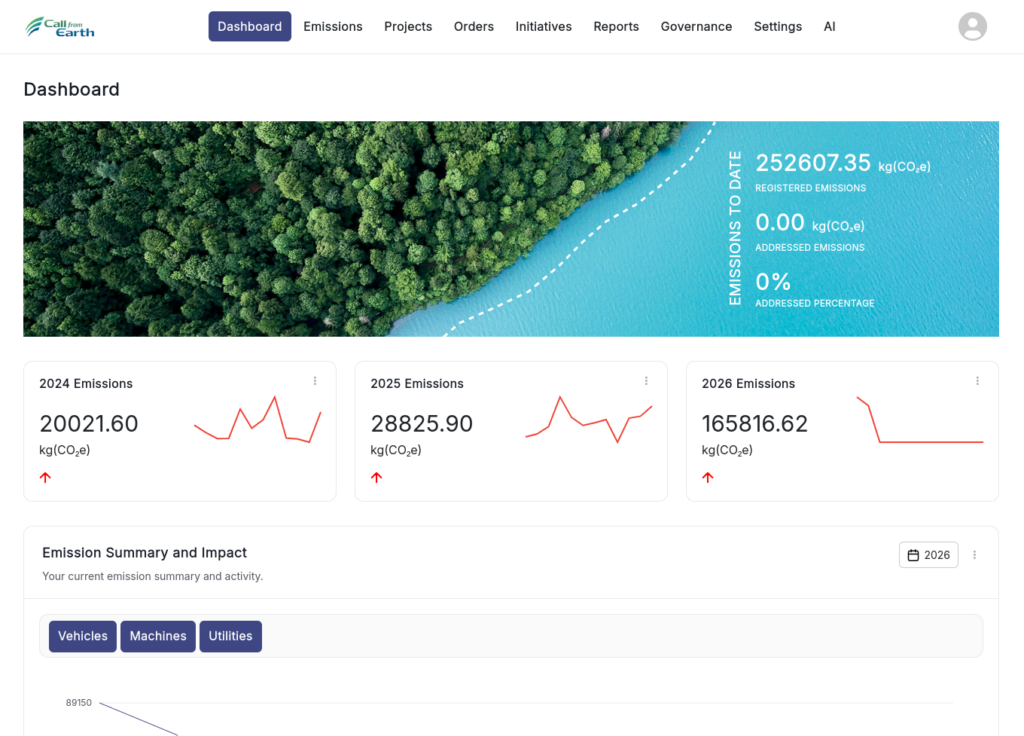
As sustainability reporting shifts from voluntary disclosure to mandatory, externally assured reporting, organisations are under increasing pressure to demonstrate not only accurate Scope 1, Scope 2, and Scope 3 emissions data, but also a clear understanding of the climate-related risks and opportunities associated with those emissions.
Auditors are no longer reviewing emissions numbers in isolation. They assess the systems, controls, methodologies, risk linkages, and evidence behind sustainability disclosures. This is why auditors increasingly recommend using a comprehensive emissions and sustainability management platform such as Call from Earth.
From Spreadsheets to Audit-Ready Emissions Reporting
Spreadsheet-based emissions tracking introduces well-known audit risks, including:
- Manual calculation and formula errors
- Poor version control
- Inconsistent emission factors
- Limited transparency over assumptions
For auditors, these risks translate into higher assurance effort and increased likelihood of findings.
A purpose-built emissions data audit platform like Call from Earth replaces spreadsheets with a structured, controlled system designed specifically for Scope 1, 2 and 3 emissions reporting and external assurance.
Methodologies Aligned with GHG and Assurance Standards
Auditors must verify that emissions are calculated using recognised frameworks, including:
- GHG Protocol (Corporate and Scope 3 Standards)
- ISO 14064-1
- Regulatory frameworks such as NGER, CSRD/ESRS, and ISSB
Call from Earth embeds these methodologies directly into the platform, ensuring:
- Correct classification of Scope 1, Scope 2, and Scope 3 emissions
- Consistent application of approved emission factors
- Transparent documentation of assumptions and estimation methods
This alignment significantly reduces methodological challenges during audit.
Audit Trails That Support Assurance
One of the most common issues identified during emissions assurance is insufficient traceability.
Auditors expect to see:
- Clear links between activity data and emissions results
- Supporting evidence for calculations
- A record of changes, reviews, and approvals
Call from Earth provides a complete audit trail linking:
- Source activity data (energy bills, fuel use, supplier data)
- Calculation methodologies and emission factors
- Final reported emissions
This allows auditors to efficiently test samples, re-perform calculations, and confirm completeness.
Reducing Manual Error and Control Risk
Auditors actively challenge emissions data that relies on:
- Manual overrides
- Inconsistent calculation logic
- Individual spreadsheet ownership
By automating emissions calculations and centralising logic, Call from Earth:
- Eliminates spreadsheet risk
- Ensures consistency across reporting periods
- Strengthens internal controls over emissions data
This directly improves audit confidence.
Making Scope 3 Emissions Auditable
Scope 3 emissions reporting is typically the highest-risk area for assurance due to:
- Multiple data sources
- Complex estimation techniques
- Supplier data limitations
Auditors favour dedicated platforms because they:
- Clearly distinguish primary vs secondary data
- Apply accepted Scope 3 calculation hierarchies
- Document data quality and estimation approaches
- Support transparent disclosure of limitations
Call from Earth enables organisations to present Scope 3 data that is structured, explainable, and auditable.
Integrating Climate Risk and Opportunity Management
Increasingly, auditors and regulators expect emissions data to be linked to climate-related risks and opportunities, not reported in isolation.
Frameworks such as ISSB (IFRS S2) and CSRD/ESRS explicitly require organisations to:
- Identify climate-related transition and physical risks
- Assess financial and operational impacts
- Link risks and opportunities to emissions sources, targets, and actions
Call from Earth extends beyond emissions calculation by incorporating risk and opportunity management capabilities, enabling organisations to:
- Identify climate risks associated with high-emitting activities and value-chain hotspots
- Assess transition risks (policy, technology, market) and physical risks
- Document climate-related opportunities such as efficiency improvements and decarbonisation initiatives
- Link risks and opportunities directly to emissions sources, targets, and mitigation actions
For auditors, this integration is critical. It demonstrates that:
- Climate risks are identified systematically
- Assessments are documented and repeatable
- Disclosures are supported by underlying data and controls
This significantly strengthens assurance readiness under ISSB and CSRD.
Consistency Across Emissions, Risks, Targets, and Disclosures
Auditors also assess consistency between:
- Emissions inventories
- Climate risks and opportunities
- Targets (e.g. SBTi or internal targets)
- Sustainability and annual report disclosures
By acting as a single source of truth, Call from Earth ensures emissions data, climate risks, and performance metrics remain aligned, with clear documentation of changes and restatements.
Faster and Lower-Cost Sustainability Assurance
From an assurance perspective, integrated emissions and risk platforms:
- Reduce audit sampling time
- Minimise clarification cycles
- Improve reliance on management systems
For organisations, this often results in:
- Shorter assurance timelines
- Fewer audit findings
- Lower assurance costs
This is a key reason that auditors increasingly recommend platforms like Call from Earth.
Conclusion: Built for Audit-Ready Emissions and Climate Reporting
Auditors recommend platforms such as Call from Earth because they transform sustainability reporting into a controlled, auditable, and integrated system.
By combining:
- GHG-aligned emissions methodologies
- Robust audit trails
- Reduced manual error
- Transparent Scope 3 handling
- Integrated climate risk and opportunity management
Call from Earth helps organisations prepare not just emissions data, but assurance-ready climate disclosures.
Frequently Asked Questions (FAQ)
Why do auditors recommend emissions platforms instead of spreadsheets?
Auditors recommend emissions platforms because spreadsheets carry high risks, including manual errors, poor version control, inconsistent emission factors, and weak audit trails. A dedicated emissions platform like Call from Earth provides structured data capture, automated calculations, and traceable evidence, significantly improving audit reliability and efficiency.
How does Call from Earth support Scope 1, 2, and 3 emissions audits?
Call from Earth structures emissions data by scope, category, source, and boundary, applying recognised methodologies aligned with the GHG Protocol and ISO 14064-1. This ensures emissions calculations are consistent, transparent, and auditable across Scope 1, Scope 2, and Scope 3.
Is Call from Earth aligned with recognised reporting and assurance standards?
Yes. Call from Earth aligns with leading standards and frameworks, including:
- GHG Protocol (Corporate and Scope 3 Standards)
- ISO 14064-1
- NGER (Australia)
- CSRD / ESRS (EU)
- ISSB (IFRS S2)
This alignment ensures emissions data meets both reporting and assurance expectations.
How does the platform support audit trails and evidence requirements?
Call from Earth maintains a clear audit trail linking:
- Source activity data (e.g. energy bills, fuel use, supplier data)
- Emission factors and calculation methods
- Reported emissions results
All changes, recalculations, and approvals are logged, allowing auditors to efficiently test, sample, and re-perform calculations.
How does Call from Earth reduce audit risk?
The platform reduces audit risk by:
- Automating emissions calculations
- Eliminating spreadsheet dependency
- Centralising emission factor libraries
- Enforcing consistent methodologies across reporting periods
This strengthens internal controls and reduces the likelihood of audit findings.
How does Call from Earth make Scope 3 emissions auditable?
Scope 3 emissions are often the most challenging to assure. Call from Earth supports Scope 3 audit readiness by:
- Distinguishing between primary and secondary data
- Applying accepted Scope 3 calculation hierarchies
- Documenting estimation methods and data quality
- Supporting transparent disclosure of assumptions and limitations
This allows auditors to assess Scope 3 emissions for reasonableness and completeness.
Does Call from Earth support climate risk and opportunity management?
Yes. In addition to emissions reporting, Call from Earth includes climate risk and opportunity management capabilities. The platform enables organisations to identify, assess, and document:
- Climate-related transition and physical risks
- Emissions-related operational and financial impacts
- Decarbonisation and efficiency opportunities
These risks and opportunities can be directly linked to emissions sources, targets, and actions.
Why is linking emissions data with climate risks important for assurance?
Frameworks such as ISSB (IFRS S2) and CSRD/ESRS require organisations to demonstrate how emissions relate to climate-related risks and opportunities. Auditors expect this linkage to be systematic and evidence-based. Call from Earth supports this integration, strengthening assurance readiness and governance disclosures.
Can Call from Earth support external assurance and audit engagements?
Yes. Call from Earth is designed to support external assurance by providing:
- Structured, audit-ready emissions data
- Clear documentation of methodologies and assumptions
- Robust audit trails and controls
- Consistency across emissions, risks, targets, and disclosures
This often results in faster audits and fewer follow-up queries.
Does using an emissions platform reduce assurance costs?
In many cases, yes. Auditors can place greater reliance on structured systems, reducing sampling time and rework. Organisations using platforms like Call from Earth often experience shorter audit cycles, fewer findings, and lower overall assurance effort.
Is Call from Earth suitable for organisations at different maturity levels?
Yes. Call from Earth supports organisations at all stages — from first-time reporters to those preparing for mandatory, assured sustainability reporting — by scaling emissions management, climate risk assessment, and reporting capabilities as requirements evolve.
© 2026 Arensen Group Pty Ltd.