How to Prepare Emissions Data for External Assurance

As emissions reporting becomes more regulated and scrutinised, external assurance of emissions data is increasingly expected by regulators, investors, and boards. Preparing for assurance is not a final-stage activity—it requires structured data, consistent methodologies, and clear governance throughout the reporting cycle.
This guide explains how to prepare emissions data for external assurance, what assurance providers typically assess, and how organisations can reduce audit risk and effort.
Why External Assurance of Emissions Data Is Important?
External assurance provides independent confidence that emissions disclosures are:
- Complete and accurate
- Prepared using recognised methodologies
- Consistent across reporting periods
- Supported by appropriate controls and evidence
With the introduction of mandatory climate disclosures in Australia, emissions data is increasingly treated as financially material, subject to governance and assurance expectations similar to financial reporting.
Poor assurance readiness can result in:
- Qualified or limited assurance opinions
- Increased audit costs
- Reporting delays
- Reputational and regulatory risk
What Assurance Providers Look for in Emissions Data?
While assurance approaches differ, most providers focus on four core areas:
1 – Emissions Data Completeness
Assurance providers assess whether:
- Organisational and operational boundaries are clearly defined
- All relevant Scope 1 and Scope 2 sources are included
- Scope 3 categories are appropriately identified (where applicable)
2 – Methodologies and Assumptions
Auditors examine whether:
- Calculations align with recognised standards (e.g. GHG Protocol)
- Emission factors are current, appropriate, and documented
- Assumptions are applied consistently year-on-year
3 – Accuracy and Internal Controls
This includes:
- Reliability of source activity data
- Use of manual spreadsheets versus structured systems
- Evidence of review and approval processes
4 – Audit Trail and Evidence
Assurance requires that:
- Reported figures can be traced to source data
- Changes and adjustments are documented
- Historical records and version control are maintained
Common Emissions Assurance Challenges
Many organisations encounter assurance issues due to:
- Spreadsheet-based emissions calculations
- Disconnected data sources across sites
- Manual data entry and rework
- Inconsistent methodologies between reporting periods
- Limited documentation of assumptions and changes
These issues often emerge late in the reporting cycle—when remediation is costly and time-constrained.
Preparation of Emissions Data for External Assurance
1 – Define Clear Organisational and Operational Boundaries
Document:
- Boundary approach (control or equity share)
- Included emission sources and exclusions
Boundary changes should be clearly justified and disclosed.
2 – Standardise Emissions Data Collection
Consistency is critical. Organisations should:
- Use standard data sources and units
- Align reporting periods across business units
- Reduce manual spreadsheets where possible
Centralised data improves traceability and accuracy.
3 – Apply Consistent Calculation Methodologies
Ensure that:
- Calculation logic is standardised across sites
- Approved emission factors are used consistently
- Methodologies are documented and repeatable
Consistency reduces auditor queries and rework.
4 – Establish Review and Approval Controls
Auditors expect evidence of governance, including:
- Clear data ownership
- Internal reviews and management sign-off
- Oversight of emissions reporting processes
This demonstrates that emissions data is managed with appropriate rigour.
5 – Maintain a Clear Audit Trail
Each emissions figure should be traceable to:
- Source activity data
- Applied emission factors
- Calculation methodology
- Review and approval history
A strong audit trail significantly reduces assurance effort.
From Reporting to Systems: The Assurance Shift
One of the most common assurance findings is that emissions data issues cannot be resolved at the reporting stage.
Organisations relying on ad-hoc processes often face:
- Last-minute data corrections
- Increased assurance costs
- Reduced confidence in disclosures
In contrast, organisations using structured systems can:
- Respond quickly to auditor requests
- Reuse data across disclosures
- Improve efficiency and assurance outcomes year-on-year
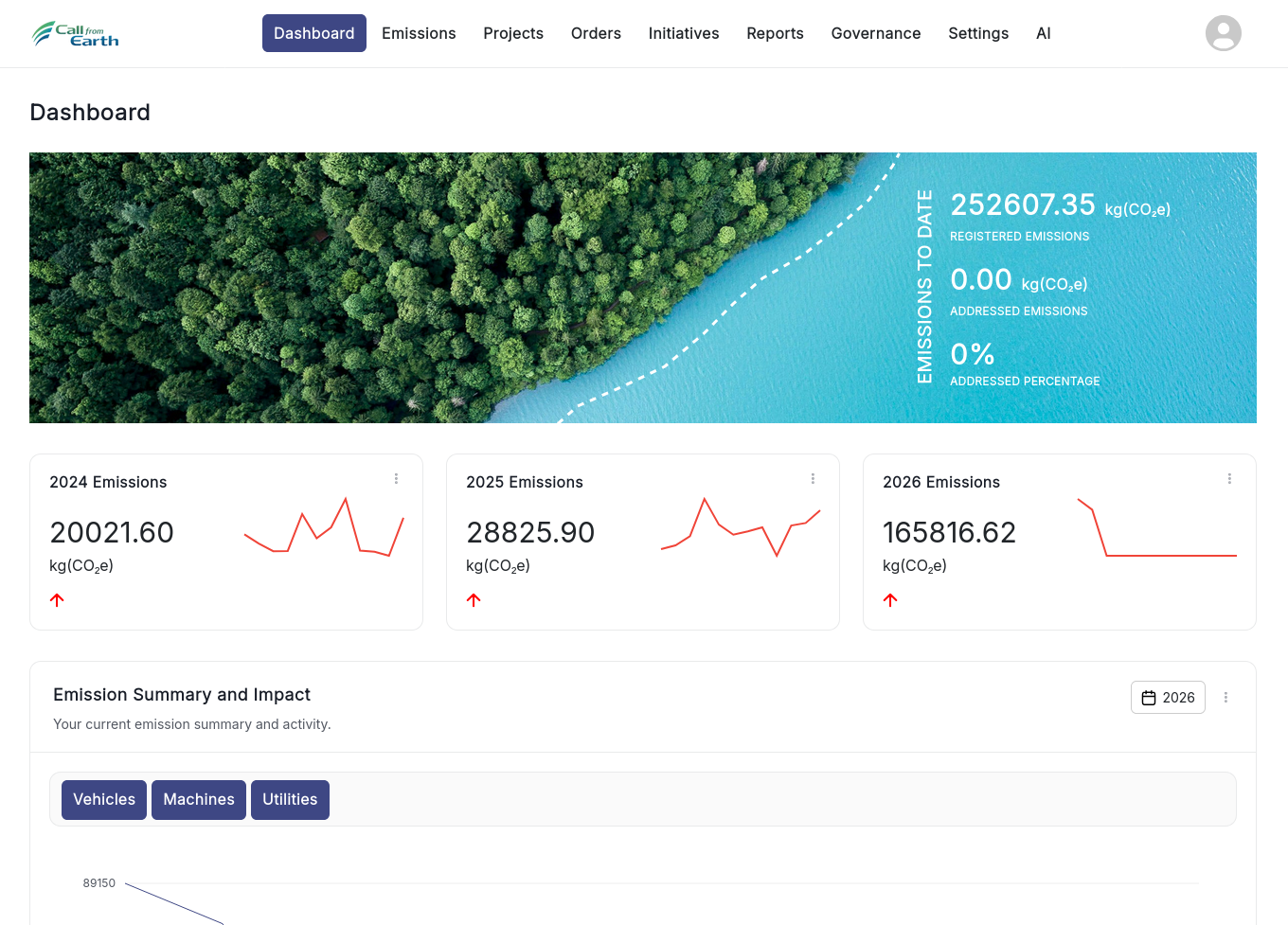
How Call from Earth Supports Assurance-Ready Emissions Data
Call from Earth is a sustainability and emissions intelligence platform designed to support external assurance readiness by enabling organisations to:
- Measure Scope 1, Scope 2, and relevant Scope 3 emissions
- Apply consistent methodologies and emission factors
- Centralise emissions data across sites and entities
- Maintain audit trails, version control, and historical records
Support broader climate and sustainability disclosure requirements
Call from Earth supports continuous, controlled emissions data management, rather than last-minute assurance preparation.
Final Thoughts
Preparing emissions data for external assurance is about more than compliance, it is about building trust in reported information.
Organisations that invest early in governance, consistency, and systems are better positioned to reduce assurance risk, control costs, and meet growing regulatory and stakeholder expectations.
External assurance becomes significantly simpler when emissions data is prepared with assurance in mind from the start.
Suggested Internal Links
Australia’s Mandatory Climate Disclosures Explained
Frequently Asked Questions about Emissions Data & External Assurance
What is external assurance for emissions data?
External assurance is an independent review performed by a qualified third party to verify that an organisation’s emissions data is accurate, complete, and prepared in accordance with recognised standards and disclosed methodologies.
Which emissions scopes are typically subject to assurance?
Most assurance engagements cover Scope 1 and Scope 2 emissions, with Scope 3 emissions increasingly included as reporting requirements expand. The scope of assurance depends on regulatory requirements, stakeholder expectations, and organisational maturity.
What standards do assurance providers expect emissions data to follow?
Assurance providers generally expect emissions data to align with recognised frameworks such as the GHG Protocol, and to be consistent with applicable disclosure standards including ISSB (IFRS S2) and climate-related financial disclosure requirements.
Why do spreadsheets create problems during emissions assurance?
Spreadsheet-based emissions reporting often lacks version control, consistent methodologies, and clear audit trails. This increases the risk of errors, rework, and additional assurance queries, leading to higher costs and delays.
What evidence is required to support emissions data during assurance?
Assurance providers typically require:
- Source activity data (e.g. energy, fuel, travel records)
- Documented emission factors and calculation methodologies
- Records of assumptions, adjustments, and boundary decisions
- Evidence of internal review and approval controls
How can organisations reduce the cost and effort of emissions assurance?
Organisations can reduce assurance effort by standardising data collection, applying consistent methodologies, maintaining clear audit trails, and using structured systems rather than manual processes. Early preparation significantly lowers assurance risk and cost.
How does Call from Earth support emissions assurance readiness?
Call from Earth helps organisations prepare assurance-ready emissions data by collecting data, centralising calculations, maintaining consistent methodologies, tracking changes over time, and providing clear audit trails aligned with reporting and disclosure requirements.
© 2026 Arensen Group Pty Ltd.