Scope 1, 2 & 3 Emissions: What Auditors Expect

As climate reporting requirements tighten, auditors are applying greater scrutiny to Scope 1, Scope 2, and Scope 3 emissions. Organisations are now expected to prepare emissions data with the same discipline, controls, and transparency as financial information.
This article explains what auditors typically expect when reviewing Scope 1, 2, and 3 emissions, common assurance issues, and how organisations can prepare audit-ready emissions disclosures.
Why Auditors Focus on Scope 1, 2 & 3 Emissions
Under emerging regulatory frameworks, including mandatory climate disclosures in Australia, emissions data is increasingly considered financially material.
Auditors focus on emissions scopes because they indicate:
- Completeness of reporting boundaries
- Exposure to operational and value-chain risk
- Credibility of emissions targets and transition plans
Weak scope definitions or inconsistent disclosures often trigger deeper audit investigation.
Scope 1 Emissions: What Auditors Expect
Scope 1 emissions are direct emissions from sources owned or controlled by the organisation, such as fuel combustion, industrial processes, and fugitive emissions.
Auditor Expectations for Scope 1
Auditors typically assess whether:
- All material direct emission sources are identified
- Organisational boundaries are clearly documented
- Activity data (fuel, refrigerants, process data) is reliable and traceable
- Emission factors are appropriate and consistently applied
Common Scope 1 Assurance Issues
- Missing emission sources
- Inconsistent treatment of leased or shared assets
- Manual calculations without supporting evidence
Scope 2 Emissions: What Auditors Expect
Scope 2 emissions relate to indirect emissions from purchased electricity, steam, heating, or cooling.
Auditor Expectations for Scope 2
Auditors expect clarity around:
- Use of location-based and market-based methods
- Source and quality of electricity consumption data
- Treatment of renewable energy instruments
- Alignment between energy procurement and emissions reporting
Common Scope 2 Assurance Issues
- Inconsistent energy data across sites
- Poor documentation of renewable claims
- Misalignment between Scope 2 disclosures and energy strategy
Scope 3 Emissions: What Auditors Expect
Scope 3 emissions cover indirect emissions across the value chain, including suppliers, transport, product use, and end-of-life treatment.
While Scope 3 is often phased into assurance requirements, auditors increasingly review its methodological robustness.
Auditor Expectations for Scope 3
Auditors generally assess:
- Identification of relevant Scope 3 categories
- Clear rationale for inclusions and exclusions
- Use of reasonable and defensible estimation methods
- Consistency in approach year-on-year
Auditors understand Scope 3 involves estimation – but expect transparency, documentation, and governance.
Common Scope 3 Assurance Issues
- Blanket exclusions without justification
- Changing categories year-to-year without explanation
- Poor documentation of assumptions and data sources
Core Audit Expectations Across All Emissions Scopes
Across Scope 1, 2, and 3, auditors consistently assess four areas:
1 – Boundary Definition
Clear documentation of organisational and operational boundaries, including changes from prior reporting periods.
2 – Methodologies and Assumptions
Alignment with recognised standards (such as the GHG Protocol) and consistent application across reporting periods.
3 – Governance and Controls
Evidence of data ownership, internal review, management sign-off, and board-level oversight where applicable.
4 – Audit Trail
The ability to trace reported emissions back to source data, calculations, and approvals.
Why Spreadsheet-Based Emissions Reporting Often Fails Audits
Auditors frequently identify risks in spreadsheet-based emissions reporting, including:
- Version control issues
- Manual calculation errors
- Inconsistent assumptions
- Limited or missing audit trails
- Traceability
As assurance expectations increase, these weaknesses become more costly and difficult to defend.
How to Prepare Scope 1, 2 & 3 Emissions for Audit
To meet auditor expectations, organisations should:
- Clearly identify, define and document emissions boundaries
- Standardise emissions data collection across sites
- Apply consistent calculation methodologies and emission factors
- Implement internal review and approval controls
- Maintain clear audit trails for all emissions data
Audit readiness is achieved through systems, governance, and repeatability, not last-minute reconciliation.
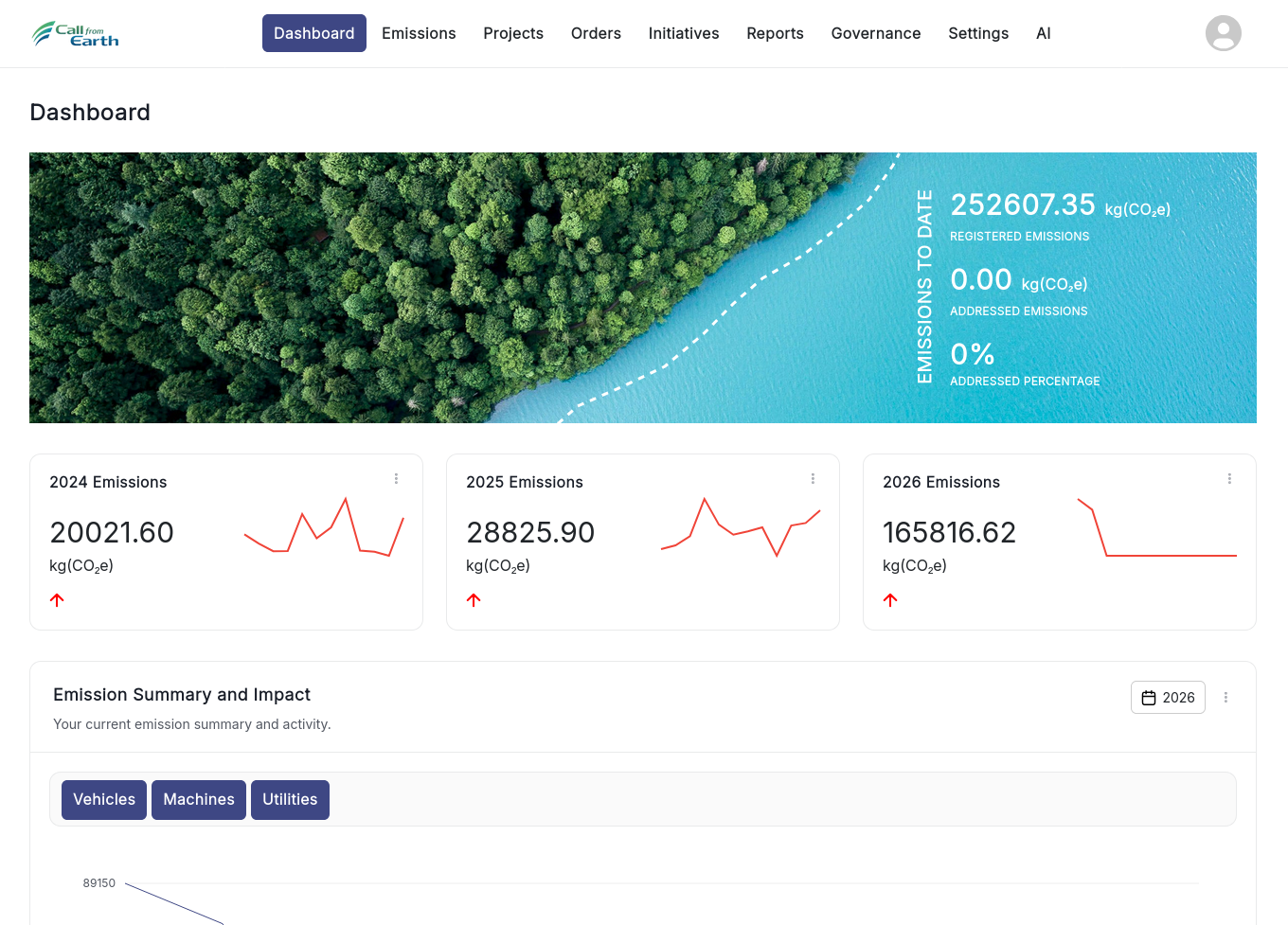
Call from Earth supports organisations preparing Scope 1, Scope 2, and Scope 3 emissions for audit and external assurance by enabling:
- Structured emissions calculations aligned with recognised standards
- Centralised emissions data management across scopes and entities
- Consistent methodologies and emission factor application
- Clear audit trails, version control, and historical records
- Manage initiative and progress
- Integration of emissions data with targets and initiatives
This allows organisations to treat audit as part of normal operations—not a disruptive event.
Final Thoughts
Auditors are not expecting perfection—but they do expect discipline, consistency, and transparency.
Organisations that understand what auditors expect across Scope 1, 2, and 3 emissions, and prepare accordingly, are better positioned to reduce assurance risk, control costs, and build confidence in their climate disclosures.
As emissions reporting becomes a core governance requirement, audit-ready emissions data is no longer optional—it is essential.
Suggested Internal Links
- How to Prepare Emissions Data for External Assurance
- Australia’s Mandatory Climate Disclosures Explained
- About Call from Earth
Frequently Asked Questions: Scope 1, 2 & 3 Emissions Assurance
What is emissions assurance for Scope 1, 2 and 3?
Emissions assurance is an independent review that assesses whether an organisation’s Scope 1, Scope 2, and Scope 3 emissions data is complete, accurate, and prepared in accordance with disclosed methodologies and recognised standards.
Which emissions scopes are typically included in external assurance?
Most assurance engagements initially focus on Scope 1 and Scope 2 emissions, with Scope 3 emissions increasingly included as reporting requirements expand. The scope of assurance depends on regulatory obligations, stakeholder expectations, and organisational maturity.
Do auditors expect Scope 3 emissions to be precise?
Auditors understand that Scope 3 emissions involve estimation. However, they expect reasonable, defensible methodologies, transparent assumptions, consistent application year-on-year, and clear justification for included and excluded categories.
What standards do auditors use to assess emissions data?
Auditors generally assess emissions data against recognised frameworks such as the GHG Protocol, and in line with applicable disclosure requirements including ISSB (IFRS S2) and climate-related financial reporting obligations.
Why are spreadsheets a risk for emissions assurance?
Spreadsheet-based reporting often lacks version control, documented changes, consistent methodologies, and robust audit trails. These weaknesses increase the risk of errors, additional assurance queries, and higher audit costs.
What evidence do auditors require for emissions assurance?
Auditors typically require:
- Source activity data (energy, fuel, transport, procurement)
- Documented calculation methodologies and emission factors
- Records of assumptions, exclusions, and adjustments
- Evidence of internal review, approval, and governance controls
How can organisations reduce assurance risk across Scope 1, 2 and 3 emissions?
Assurance risk can be reduced by clearly defining emissions boundaries, standardising data collection, applying consistent methodologies, maintaining audit trails, and using structured systems rather than manual spreadsheets.
© 2026 Arensen Group Pty Ltd.